



TGF-β Receptor
Transforming growth factor beta receptors
TGF-β receptors (Transforming growth factor-β receptors) are single pass serine/threonine kinase receptors. Transforming growth factor beta (TGF-beta) is a member of a large family of pleiotropic cytokines that are involved in many biological processes, including growth control, differentiation, migration, cell survival, adhesion, and specification of developmental fate, in both normal and diseased states. TGF-beta superfamily members signal through a receptor complex comprising a type II and type I receptor, both serine/threonine kinases.
The type I receptors, referred to as activin receptor-like kinases (ALK), lie at the epicenter of the signaling cascade as they transduce TGF-beta signals to intracellular regulators of transcription known as Smad proteins. ALKs possess an extracellular binding domain, a transmembrane domain, a GS domain that serves as the site of activation by type II receptors, and a kinase domain that activates downstream signaling molecules. ALKs mediate the effect of TGF-beta superfamily on a variety of cellular processes such as proliferation, differentiation, apoptosis, adhesion and migration, and therefore play important roles in many biological processes. Some ALKs have been implicated in several disorders, including tumorigenesis and immune diseases, suggesting that these receptors can be used as drug targets.
TGF-β Receptor Isoform Specific Products
-
TGF-β Receptor
(215)
View all products
-
ALK1
(9)
View all products
-
ALK2
(31)
View all products
-
ALK3
(12)
View all products
-
ALK4
(10)
View all products
-
ALK5
(31)
View all products
-
ALK6
(7)
View all products
-
ALK7
(7)
View all products
-
TGFβR2
(6)
View all products
-
ACVR2A
(5)
View all products
-
ACVR2B
(3)
View all products
-
BMP
(1)
View all products
-
GDF15
(12)
View all products
All Product Categories
-
TGF-β Receptor Inhibitors
(242)
View all products
-
TGF-β Receptor Agonists
(10)
View all products
-
TGF-β Receptor Antagonists
(9)
View all products
-
TGF-β Receptor Activators
(21)
View all products
-
TGF-β Receptor Modulators
(2)
View all products
-
TGF-β Receptor Inducer
(1)
View all products
-
TGF-β Receptor Degraders
(2)
View all products
-
TGF-β Receptor Controls
(6)
View all products
-
TGF-beta Receptor Proteins
(22)
View all products
-
ALK-3 Proteins
(4)
View all products
-
ALK-6 Proteins
(3)
View all products
-
BMP Type II Receptor (BMPR2) Proteins
(5)
View all products
-
ALK-2/ACVR1 Proteins
(14)
View all products
-
ALK-4/Activin RIB Proteins
(7)
View all products
-
ALK-7 Proteins
(6)
View all products
-
Activin A Receptor Type 2A (ACTR-IIA) Proteins
(9)
View all products
-
Activin A Receptor Type 2B (ACVR2B) Proteins
(10)
View all products
-
ALK-1/ACVRL1 Proteins
(9)
View all products
-
Anti-Muellerian Hormone Type-2 Receptor (AMHR2) Proteins
(8)
View all products
-
TGF-β Receptor 1 Proteins
(7)
View all products
-
TGF-beta Receptor 2 Proteins
(13)
View all products
-
Type III TGF-β Receptor Proteins
(3)
View all products
-
ALK-3/CD292 Proteins
(4)
View all products
-
TGF-β Receptor Related Products (346)
Related Products (346)

-
Recombinant Proteins (98)
-
Antibodies (16)
-
TGF-β Receptor Isoform Comparison
-
7-O-Galloyl-D-sedoheptulose
 0 ImagesCat. No.: HY-N16527CAS No.: 233690-85-27-O-Galloyl-D-sedoheptulose is an orally effective polyphenolic compound. 7-O-Galloyl-D-sedoheptulose lowers the serum levels of glucose, leptin, insulin, C-peptide, resistin, TNF-α, IL-6, and increases the serum level of adiponectin. 7-O-Galloyl-D-sedoheptulose significantly reduces the levels of ROS and lipid peroxidation products (TBARS) by down-regulating the protein expression of NADPH oxidase subunit Nox-4 and p22phox. 7-O-Galloyl-D-sedoheptulose down-regulates NF-κB and related pro-inflammatory factors (COX-2, iNOS), inhibits the phosphorylation of JNK and the activity of its downstream AP-1. 7-O-Galloyl-D-sedoheptulose reduces the expression of TGF-β1 and fibronectin, indicating its potential in anti-tissue fibrosis. 7-O-Galloyl-D-sedoheptulose can be used for the study of type 2 diabetes and its hepatic and pancreatic complications.
-
Finbosertib
 0 ImagesCat. No.: HY-178231CAS No.: 2766583-86-0Synonyms: ALK5-IN-85

-
Anti-BMP6 Antibody
 0 ImagesCat. No.: HY-P991880
-
CPS-021
 0 ImagesCat. No.: HY-174247CPS-021 is a selective PAK4 PROTAC degrader with a DC50 of 50 nM. CPS-021 degrades PAK4 via the ubiquitin-proteasome system. CPS-021 inhibits the migration and invasion of tumor cells, suppresses TGFβ-induced epithelial-mesenchymal transition (EMT) in tumor cells, and can be used in studies related to lung cancer metastasis.
-
ALK5-IN-25
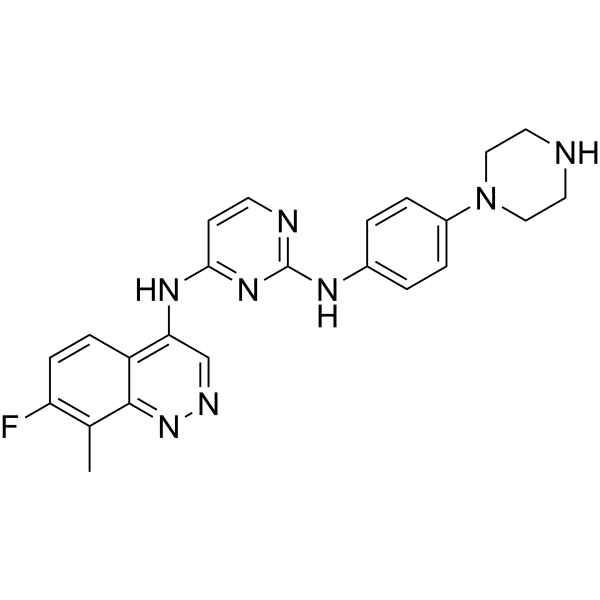 0 ImagesCat. No.: HY-151270CAS No.: 2785430-81-9ALK5-IN-25 (compound EX-02) is a potent ALK-5 inhibitor with an IC50 ≤10 nM.ALK5-IN-25 also inhibits ALK-2 (selectivity ALK2/ALK5≤10). ALK5-IN-25 can be used for the research of cancer.
-
Klotho-derived peptide 1
 0 ImagesCat. No.: HY-P10414Synonyms: KP1 (human)Klotho-derived peptide 1 (KP1 (human)) is a polypeptide with multiple activities including senescence inhibition and renal protection. Klotho-derived peptide 1 binds to TβR2 and ATAD3A, with a Kd value of 1.41 μM for binding to human TβR2 and a Kd value of 0.319 μM for binding to ATAD3A. By binding to TβR2, Klotho-derived peptide 1 blocks the TGF-β/Smad3 and downstream TGF-β signaling pathways, inhibits the expression of miR-223-3p, induces the expression of lncRNA-TUG1, restores endogenous Klotho at the post-transcriptional level, inhibits cellular senescence markers, fibroblast activation and renal tubular epithelial cell apoptosis, blocks cytochrome c release and caspase activation, maintains the integrity of mitochondrial ultrastructure, and restores mitochondrial protein levels. Klotho-derived peptide 1 enters renal tubular epithelial cells via endocytosis, protects against nephrotoxic and hypoxic injuries, and recapitulates the renal protective and anti-fibrotic effects of full-length Klotho. Klotho-derived peptide 1 can be used in research related to kidney diseases such as chronic kidney disease and SARS-CoV-2-associated acute kidney injury.

-
NSC 90469 (Standard)
 0 ImagesCat. No.: HY-114557RCAS No.: 1041-01-6Synonyms: 3,5-Diiodo-L-thyronine (Standard)NSC 90469 (Standard) is the analytical standard of NSC 90469. This product is intended for research and analytical applications. NSC 90469 (3,5-Diiodo-L-thyronine) is an orally active thyroid hormone derivative. NSC 90469 inhibits JNK phosphorylation and NF-κB acetylation, blocks SIRT1 protein expression, induces elevated PGC-1α levels, and stimulates COX activity. NSC 90469 enhances UCP1-mediated thermogenesis, increases hepatic Dio1 activity, inhibits TSH levels and hypothalamic-pituitary-thyroid axis function, enhances lipid metabolism, and regulates energy metabolism via the mitochondrial pathway. NSC 90469 prevents blood glucose reduction, reduces urinary albumin excretion, inhibits renal matrix expansion, decreases TGF-β1 expression, and reduces renal fibronectin and type Ⅳ collagen deposition. NSC 90469 also increases energy expenditure and prevents diet-induced overweight. NSC 90469 can be used in studies related to diabetic nephropathy, hypothyroidism, non-alcoholic fatty liver disease, and diet-induced obesity.
-
Anti-BMPR1B Antibody
 0 ImagesCat. No.: HY-P991882
-
MU1700
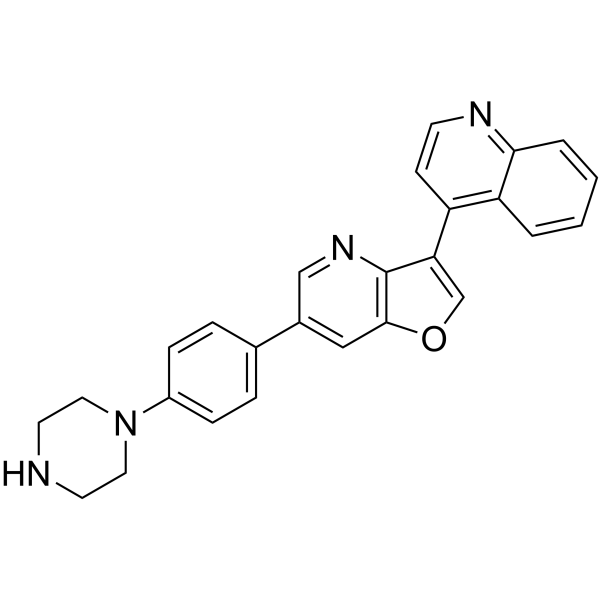 0 ImagesCat. No.: HY-148246CAS No.: 3055312-41-6MU1700, a chemical probe, is an orally active and potent ALK1/2 inhibitor with IC50s of 13 nM and 6 nM, respectively. MU1700 shows cell membrane permeability and high brain permeability.
-
RepSox-d5
 0 ImagesCat. No.: HY-13012SSynonyms: E-616452-d5; SJN 2511-d5RepSox-d5 (E-616452-d5) is the deuterium labeled RepSox (HY-13012). RepSox (E-616452) is a potent and selective transforming growth factor-beta receptor I/activin like kinase 5 (TGF-β-RI/ALK5) inhibitor. RepSox inhibits ALK5 autophosphorylation with an IC50 value of 4 nM. RepSox can be used for the research of obesity and associated metabolic diseases such as type 2 diabetes.
-
TGFβ-IN-3
 0 ImagesCat. No.: HY-149196CAS No.: 2857845-34-0
-
LM9
 0 ImagesCat. No.: HY-180336CAS No.: 2249864-11-5LM9 is a potent, orally active MyD88 inhibitor. LM9 blocks TLR4/MyD88 binding, MyD88 homodimer formation, and TLR4/MyD88/NF-κB signaling pathway activation. LM9 prevents atherosclerosis by regulating inflammatory responses and oxidative stress in macrophages. LM9 efficiently mitigates inflammatory responses and fibrosis in obesity-induced cardiomyopathy. LM9 can be used for fibrosis and atherosclerosis research.
-
Tertomotide hydrochloride
 0 ImagesCat. No.: HY-105067ACAS No.: 922174-60-5Synonyms: GV-1001 hydrochlorideTertomotide hydrochloride (GV-1001 hydrochloride) is a 16-amino acid peptide derived from hTERT, with both cell-penetrating and immunostimulatory activities, and it can cross the blood-brain barrier. Tertomotide hydrochloride binds to STING, HO-1, eHSP70, eHSP90, bradykinin receptor 1, VEGFR-2, NF-κB, p38 MAPK and Smad2. Tertomotide hydrochloride induces type I interferon production, mitochondrial DNA stress and T-cell responses; inhibits HBV replication, angiogenesis, TGF-β signaling pathway, NF-κB activation, endothelial-mesenchymal transition (EndMT) and fibrosis; regulates microglia; and exerts neuroprotective, anti-inflammatory, antioxidant, anti-apoptotic and anti-tumor effects. Tertomotide hydrochloride can be used in research related to hepatitis B virus infection, Alzheimer's disease, non-small cell lung cancer, atherosclerosis and depression.
-
ALK5-IN-27
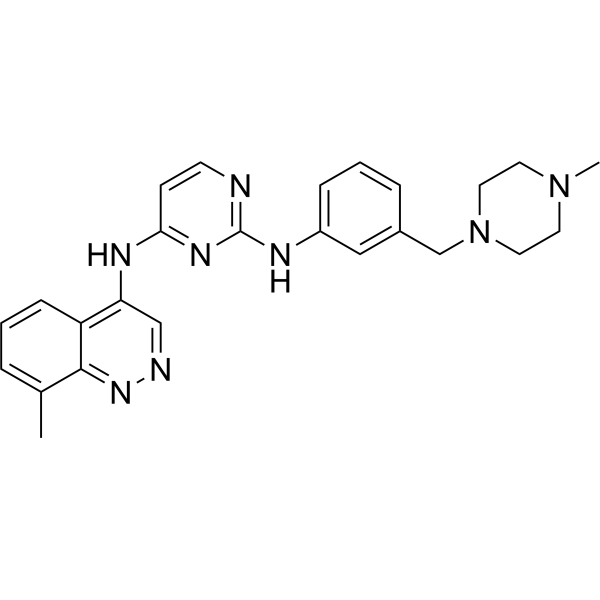 0 ImagesCat. No.: HY-151273CAS No.: 2785430-83-1ALK5-IN-27 (Compound EX-04) is a potent ALK-5 inhibitor with an IC50 ≤10 nM. ALK5-IN-27 also inhibits ALK-2 (selectivity ALK2/ALK5 ≤10).
-
LG190155
 0 ImagesCat. No.: HY-118970CAS No.: 233268-78-5LG190155 is a nonsteroidal vitamin D receptor (VDR) agonist. LG190155 activates VDR in mesenchymal stem cells, thereby upregulating the BMP6-IL6 autocrine axis. Pretreatment of mesenchymal stem cells with LG190155 significantly enhances their ability to induce differentiation of acute myeloid leukemia cells, without inducing hypercalcemia. LG190155 is applicable to research related to acute myeloid leukemia (AML).
-
Pixofisiran sodium
 0 ImagesCat. No.: HY-177657A
-
HM-279
 0 ImagesCat. No.: HY-185430CAS No.: 3039954-64-5HM-279 is a potent and orally active ALK5 inhibitor with an IC50 of 4.7 nM. HM-279 shows cross-reactivity with ALK7 (IC50 = 6.8 nM), but HM-279 has fair to good selectivity against other TGF-β receptor family kinases, with 4.5-693-fold selectivity. HM-279 demonstrates antitumor activity in vivo through CD8+ T cell immunity. HM-279 can be used for the research of colon cancer.
-
BUR1
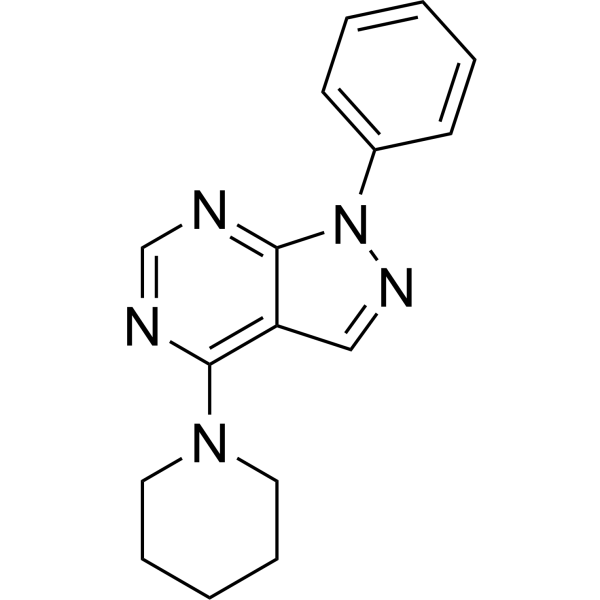 0 ImagesBUR1 is a BMP upregulator (EC50: 98 nM) and activates BMPRII signalling. BUR1 induces BMP2 and PTGS2 expression. BUR1 reversed pulmonary arterial pressure in Monocrotaline (HY-N0750) induced rats.




